
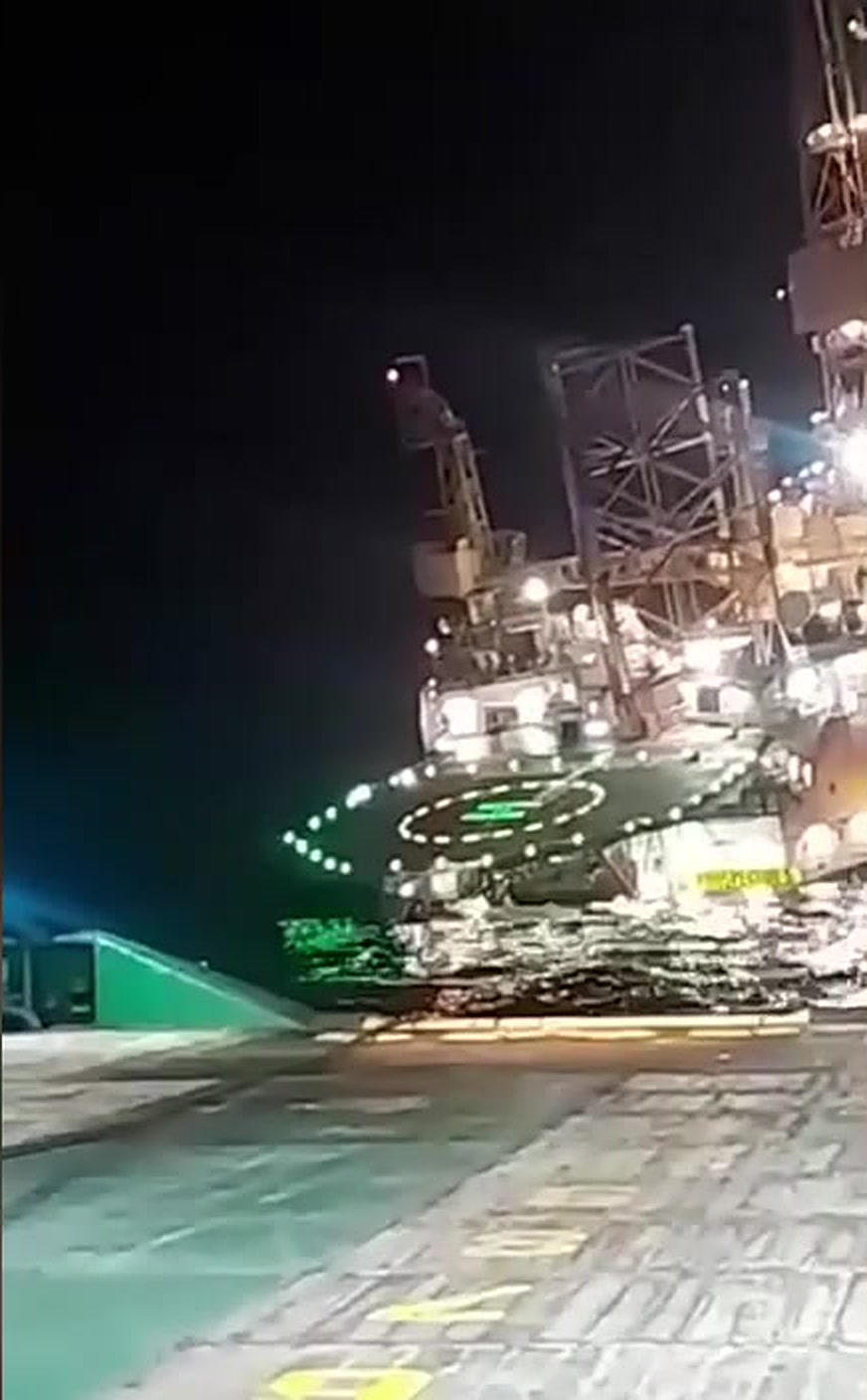
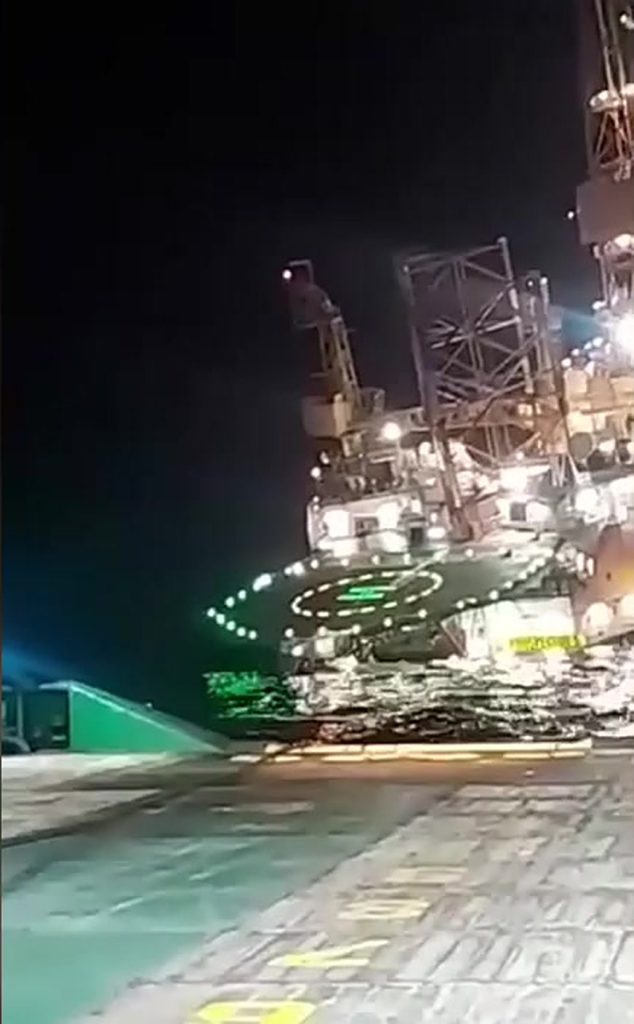
Borr Drilling’s jack-up rig Prospector 5 sank offshore Gabon at about 20:37 local time on Saturday, 24 October 2026. It went down while jacking up for a planned drilling campaign on BW Energy’s Dussafu Marine licence. Of the 115 people on board, 110 have been accounted for. Five remain missing, and search and rescue operations are ongoing.
Borr’s preliminary information points to a punch-through during preload. A punch-through can cause a sudden loss of leg support, and the rig lost stability and sank.
What we know
Three companies issued statements on 25 October, and their facts agree.
- Borr Drilling (rig owner and operator) confirmed the incident. It attributed it, on preliminary information, to a punch-through during preload that “resulted in loss of stability and the subsequent sinking.” Its onshore emergency response team has been activated, and it is working with local authorities and BW Energy.
- BW Energy (Dussafu operator) said the rig was jacking up ahead of a planned drilling campaign. Production at the MaBoMo facility had already been shut in, which is standard procedure during drilling preparations. BW reports no damage to the facility and no discharge of harmful substances to sea from it.
- Panoro Energy (Dussafu partner) confirmed the same figures: 115 on board, 110 accounted for, five missing.
No company has yet said what it expects for the wreck, any pollution from the rig itself, or when the drilling programme might resume.
The rig
Prospector 5 is a 12-year-old premium independent-leg cantilever jack-up. Borr acquired it with its 2018 purchase of Paragon Offshore.
- Design: Friede & Goldman JU-2000E
- Built: 2014, China State Shipbuilding Corporation
- Max water depth: 400 ft
- Max drilling depth: 35,000 ft
- Previous work: Total (Elgin, UK North Sea), Nexen/CNOOC (Glengorm), Neptune Energy (Dutch sector), then West Africa from 2022
Specs and history: Offshore Energy.
Punch-through during preload
Punch-through is one of the most feared geotechnical hazards in jack-up operations. It happens when a spudcan suddenly breaks through a strong soil layer into a weaker one below.
Why preload exists. Once a jack-up has lowered its legs to the seabed, it is preloaded. Ballast water is taken on, often loading one leg at a time, so that each leg carries more than the worst storm load expected on location. This drives the spudcans deeper until the soil can hold that load. Preload is meant to find any weakness in the foundation before the rig is at full air gap and drilling.
How punch-through occurs. The danger is a “strong-over-weak” soil profile, typically dense sand or stiff clay over soft clay. The strong layer carries the spudcan at first, then fails abruptly. The leg can drop several metres in seconds, and the hull racks and tilts toward that leg. If the hull is already high above the water, the rig can heel past the point of recovery. Leg structural failure, flooding and capsize can follow.
How the industry manages it. The standard tools are:
- A site-specific assessment under ISO 19905-1 / SNAME 5-5A, using geophysical and geotechnical data to predict leg penetration and flag punch-through risk.
- Keeping the hull low, with minimal air gap, during preload so a sudden leg drop has less room to tilt the rig.
- Preloading in controlled stages, often one leg at a time, while monitoring leg penetration and hull inclination.
- On known strong-over-weak sites, mitigations such as perforation drilling, spudcan skirts or holding preload longer.
For Prospector 5, Borr has described punch-through only as preliminary. The investigation will need to set out the soil data available for this location, the predicted and actual leg penetrations, and the air gap and preload sequence at the moment of failure.
What to watch
- Search and rescue. The search for the five missing personnel comes first. Updates are expected from Borr and BW Energy.
- The investigation. Gabonese authorities, the flag state and the companies are expected to look at site survey data, leg-penetration predictions and the preload procedure.
- Environmental status. Whether the sunken rig releases fuel or other fluids, and how the wreck will be secured or removed.
- Commercial impact. The loss of a contracted premium jack-up for Borr, and delays to BW Energy’s Dussafu drilling programme. The MaBoMo shut-in is part of normal drilling preparations, but production timing will be watched.
- Industry response. Possible reviews of preload practice and site assessments on soft West African seabeds.